
Damp on an internal wall is usually caused by one of four things: a leaking pipe, damp rising up from the ground because the internal wall has no working damp proof course, moisture coming from a chimney breast, or water tracking across from a neighbour's side of a party wall. Rain can't reach an internal wall directly, so condensation and rain penetration are less likely than people expect. The pattern of the damp (where it sits, how high it goes and whether it changes with the weather) is the quickest clue to the cause.
We investigate damp on internal walls for homeowners, landlords and buyers across Eastbourne, Hastings, St Leonards, Bexhill, Hailsham, Polegate, Seaford, Lewes, Brighton, Battle, Rye and Tunbridge Wells. Here's how to work out what's going on.
Why would an internal wall get damp at all?
Because internal walls still touch the ground, the plumbing and, in older houses, the chimney. In many Victorian and Edwardian homes the internal walls were built straight off the foundations with no damp proof course, or with one that has since been bridged by a newer concrete floor or screed. Pipes run through or alongside them. And in terraces and semis, the 'internal' wall between two lounges may be a party wall that is wet on the other side.
Is it a leak?
A leak is the first thing we rule out, because it's the most common cause and the cheapest to fix. Signs that point to a leak:
A patch that keeps growing or stays wet in dry weather
Damp near a radiator, boiler, sink, bath or shower on the other side of the wall
A patch higher up the wall, well above the floor, often with a brown tidemark
Damp under a bathroom or kitchen upstairs
Central heating pipes buried in the floor or the wall can weep for months before anyone notices. If you're not sure, our guide to whether a damp patch is a leak, condensation or damp walks through the checks.
Could it be rising damp on an internal wall?
Yes, and it's more common in older properties than most people think. Rising damp on an internal wall usually looks like this:
A band of damp along the bottom of the wall, typically up to about a metre high
A salty, crumbly or 'fluffy' white deposit on the plaster
Peeling paint or wallpaper and rotting skirting boards (see damp or rotten skirting boards)
Damp on both sides of the same wall, at a similar height
A frequent cause is a solid floor laid in later years that sits above the old damp proof course, or a damp proof membrane that wasn't lapped into the wall. Moisture then has nowhere to go but up the wall. Our rising damp signs article covers the full picture, and is DPC injection right for my wall? explains when injecting a new damp proof course is the right fix and when it isn't.
What if the damp is on a chimney breast?
Chimney breasts are often internal walls, and they cause their own kind of damp. Rain getting in through an uncapped pot or failed flashing, and salts left behind by years of coal fires, can both leave brown or yellow stains and damp patches that come and go with the weather and humidity. If your internal damp is on or next to a chimney breast, read damp around a chimney breast.
Can damp come through from next door?
It can. On a party wall, damp may be coming from a neighbour's leaking pipe, a shower without a good seal, a garden built up against their side of the wall, or their own rising damp. If the damp is on the shared wall only and you can't find a cause on your side, it's worth a friendly word with your neighbour. A survey report showing where the moisture is coming from makes that conversation much easier.
Is it ever condensation on an internal wall?
Sometimes, but less often. Internal walls are usually warmer than outside walls, so condensation tends to form elsewhere first. It can happen on internal walls in unheated rooms, behind wardrobes pushed tight to the wall, or in a cold corner where an internal wall meets an external one. Condensation shows as black mould spots on the surface rather than a tidemark or salts. See mould behind furniture for that pattern.
How do you find the cause properly?
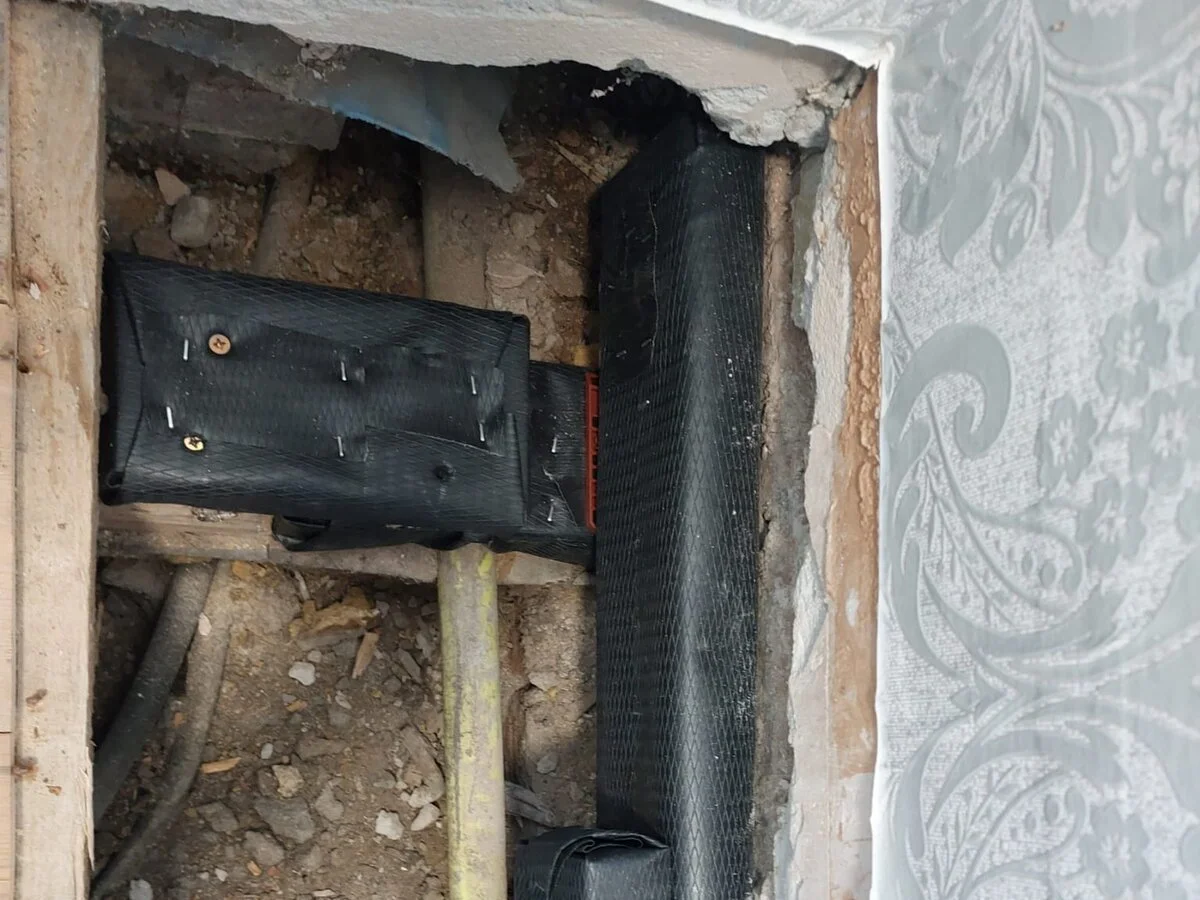
A moisture meter on its own isn't enough. Readings on plaster can be high because of salts rather than water (our guide to moisture meter readings explains why). On a damp survey we:
Map the damp across the wall and on both sides where we can
Check floor levels, the floor construction and where the damp proof course sits
Look for pipework, leaks and wet areas nearby
Check any chimney breast and the shared wall for outside sources
Tell you what work is needed, what isn't, and what can wait
How is damp on an internal wall fixed?
It depends entirely on the cause:
Leak: repair the pipe or seal, then let the wall dry out. Often no damp treatment is needed at all.
Rising damp: sort out any bridging first, then a damp proof course injection if needed, followed by replastering with a salt-resistant plaster. See replastering after damp.
Chimney: cap or ventilate the flue, repair flashing, and deal with salt-contaminated plaster.
Party wall: fix the source on the neighbour's side where possible.
Condensation: improve heating and airflow, and move furniture away from the wall.
The worst outcome is paying for treatment that doesn't match the cause, such as injecting a wall that was really wet from a leaking pipe.
Worried about damp on an inside wall?
If you've got damp on an internal wall in Sussex or Kent and you can't pin down why, we can take a look. Our damp and timber surveys cost £50 + VAT and you get a clear explanation of the cause and what (if anything) needs doing. You can see what our damp survey covers. Call 01424 863146 or book a survey.
Frequently asked questions
What causes damp on an internal wall?
The most common causes are a leaking pipe, rising damp where the internal wall has no working damp proof course, moisture from a chimney breast, or damp coming through a party wall from next door. Condensation is less common on internal walls.
Can you get rising damp on an internal wall?
Yes. Many older houses have internal walls with no damp proof course, or one bridged by a newer solid floor. It usually shows as a band of damp and salts along the bottom of the wall.
How do I know if damp on an internal wall is a leak?
A leak usually causes a patch that keeps growing or stays wet in dry weather, often near radiators, boilers, bathrooms or kitchens, and sometimes higher up the wall with a brown tidemark.
Is damp on an internal wall serious?
It is usually fixable, but it should not be ignored. Left alone it can damage plaster, rot skirting boards and floor timbers, and encourage mould.
How much is a damp survey for an internal wall?
Renovani's damp and timber surveys cost £50 + VAT across Sussex and Kent, including Eastbourne, Hastings, Bexhill, Hailsham, Polegate, Seaford, Lewes, Brighton, Battle, Rye and Tunbridge Wells.
