
A damp patch that wasn't there last month is one of the most common reasons people call us across Sussex and Kent, and it nearly always comes with the same question: is it a leak, is it condensation, or is it "proper" damp?
The answer matters, because the fixes are completely different. A dripping pipe needs a plumber, condensation needs better ventilation and heating habits, and penetrating or rising damp needs the cause dealt with at the wall. Treating the wrong one wastes money and the patch comes back.
Here's how to narrow it down before you spend anything.

1. Look at where the patch is
Ceiling below a bathroom, en-suite or tank: most likely a plumbing leak, a failed shower seal or grout. Check whether it grows after someone showers.
Top-floor ceiling or near a chimney breast: often a roof, flashing or chimney problem letting rain in. See our guide to damp around a chimney breast.
External wall, high up or mid-height: usually penetrating damp from gutters, downpipes, cracked render or failed pointing.
Bottom metre of a ground-floor wall: could be rising damp, but very often it's a bridged damp-proof course, raised ground levels or render taken down to the ground.
Cold corners, behind wardrobes, around window reveals: classic condensation, especially in bedrooms and north-facing rooms.
2. Notice when it gets worse
Worse after heavy rain, especially wind-driven rain: points to penetrating damp. (More on that in penetrating damp after heavy rain.)
Worse in cold weather, and in the morning, with streaming windows: points to condensation.
Worse whenever a tap, shower or heating runs, regardless of weather: points to a leak.
There all year, with a fairly level "tide mark" and salts on the surface: worth checking for rising or bridged damp.
3. Look at the patch itself
A sharp-edged ring or brown stain that spreads outward: typical of water coming from one point, such as a leak or rain entry.
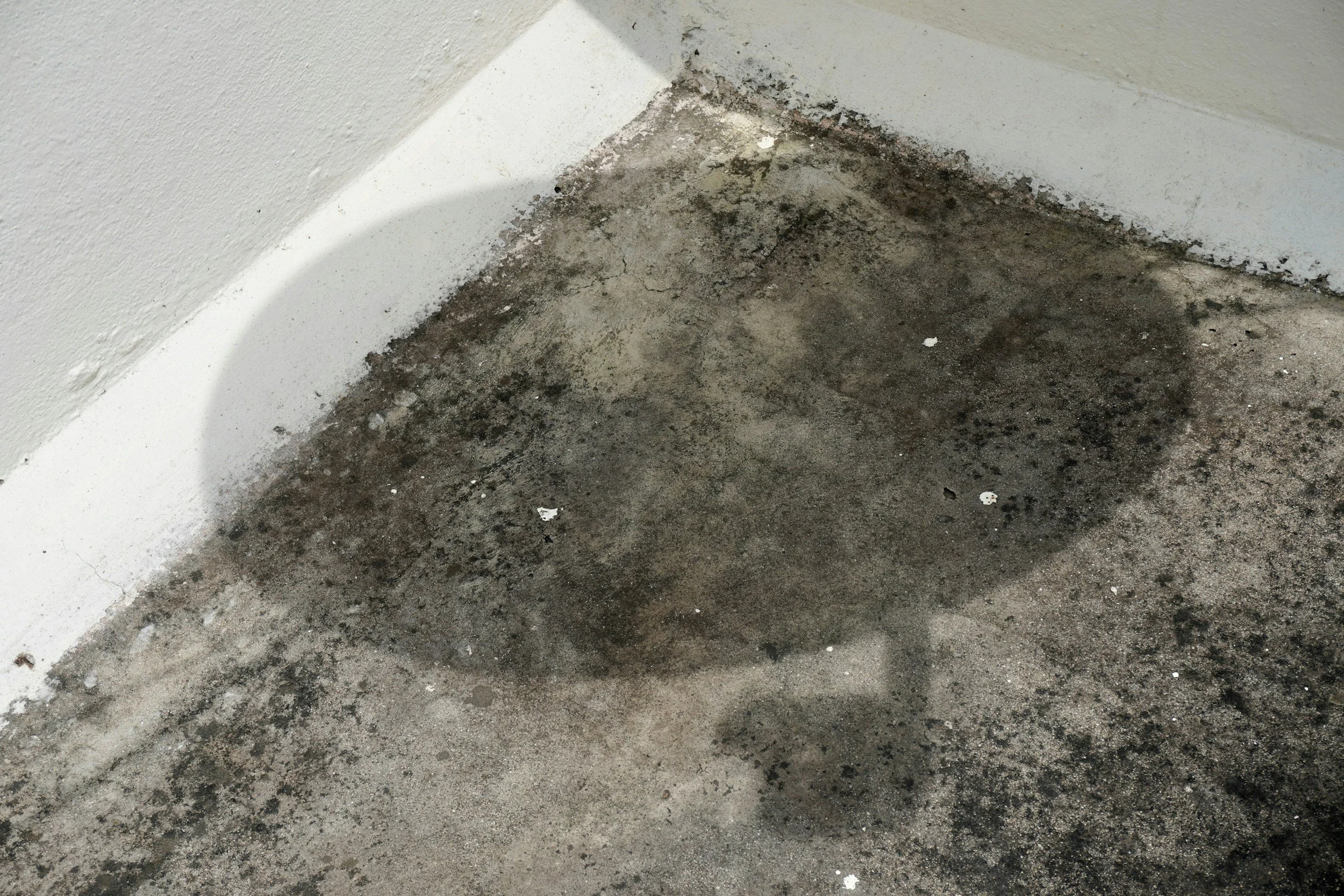
Black spotty mould spread over a wider area: usually condensation feeding mould growth.
White fluffy crystals or blown, crumbly plaster: hygroscopic salts, typical of long-term damp coming through masonry.
Wet to the touch on the surface only, on a cold day: often condensation rather than water coming through the wall.
4. Simple checks you can do yourself
Walk round outside with a torch after rain. Look for overflowing gutters, leaking downpipe joints, cracked render, missing pointing and soil or paving piled against the wall.
Turn off all taps and appliances and check your water meter. If it still moves, you probably have a leak somewhere.
Tape a small square of cling film or foil to the wall overnight. Moisture on the room side suggests condensation; moisture underneath suggests it's coming through the wall.
Watch your humidity. A cheap hygrometer reading regularly above about 60–65% in living spaces makes condensation much more likely.
A word on cheap moisture meters: they're useful as a rough guide, but they read high on salts, foil-backed plasterboard and some paints, so a high reading on its own doesn't prove rising damp. Our guide to moisture meter readings explains why.
5. Why it's often more than one thing
In older Sussex and Kent homes, especially solid-wall Victorian and Edwardian properties, we regularly find two causes working together: a leaking gutter wetting the wall, which makes it colder, which then attracts condensation and mould inside. Fix only one and the patch fades but doesn't go.
When it's worth getting a survey
Get a professional look if:
the patch keeps coming back after you've cleaned or redecorated
plaster is blowing, crumbling or showing salts
skirting boards or floorboards feel soft (timber decay can follow long-term damp)
you're buying, selling or remortgaging and need a written answer
you've had conflicting advice or a quote for injection damp-proofing you're not sure about
A good damp survey should identify the actual source, not just confirm there's moisture. Read what a damp survey should tell you so you know what to expect.
Book a £50 damp survey
Renovani carries out independent damp and timber surveys across Sussex and Kent, including Hastings, Eastbourne, Bexhill, Brighton, Lewes and Tunbridge Wells. We'll find the cause, explain it in plain English and tell you honestly if it's a simple fix you or a roofer or plumber can sort, rather than a treatment you don't need.
