
ROTTEN TIMBER REPAIRS: WET ROT AND DRY ROT
Survey the moisture source first, then cut out, replace and treat weakened timber so the rot does not simply come back.
BOOK A SURVEY — £50 + VAT CALL 01424 863146 WHATSAPPRot starts with damp, not with the timber itself
Soft floors, crumbling skirting and a musty smell often point to timber that has been damp for too long. Wet rot and dry rot are both forms of fungal decay. They need moisture to start, and they will come back if that moisture is left in place.
Fungal decay needs moisture. Common sources include leaking roofs, gutters or pipes, penetrating damp, a bridged damp-proof course, high ground levels, blocked airbricks, and poorly ventilated subfloors. Condensation can also keep timber damp in the wrong conditions.
A lasting repair always starts with that moisture source. Replacing a joist or a windowsill without fixing the leak, the damp or the airflow often means the new timber fails in the same way. Our damp proofing and ventilation pages explain how we approach those underlying problems.
How they differ
Wet rot usually stays close to a persistently damp area. The timber may feel soft or spongy, crack along the grain and lose strength. It is often found around leaking windows and sills, damp skirting, plumbing leaks and poorly ventilated floors. Once the moisture source is removed and the timber dries, the decay usually becomes inactive, though weakened wood may still need repair or replacement.
Dry rot can spread through timber and, in suitable damp, poorly ventilated conditions, across masonry and through voids. Signs can include brittle timber with cuboidal cracking, white or grey cotton-wool growth, fungal strands, or rust-coloured spore dust. Despite the name, dry rot also needs moisture. It does not develop in dry timber.
A survey is the reliable way to tell them apart. See our guides to wet rot versus dry rot and dry rot warning signs. Woodworm can appear in the same damp timber; that work is covered on our timber treatment page.
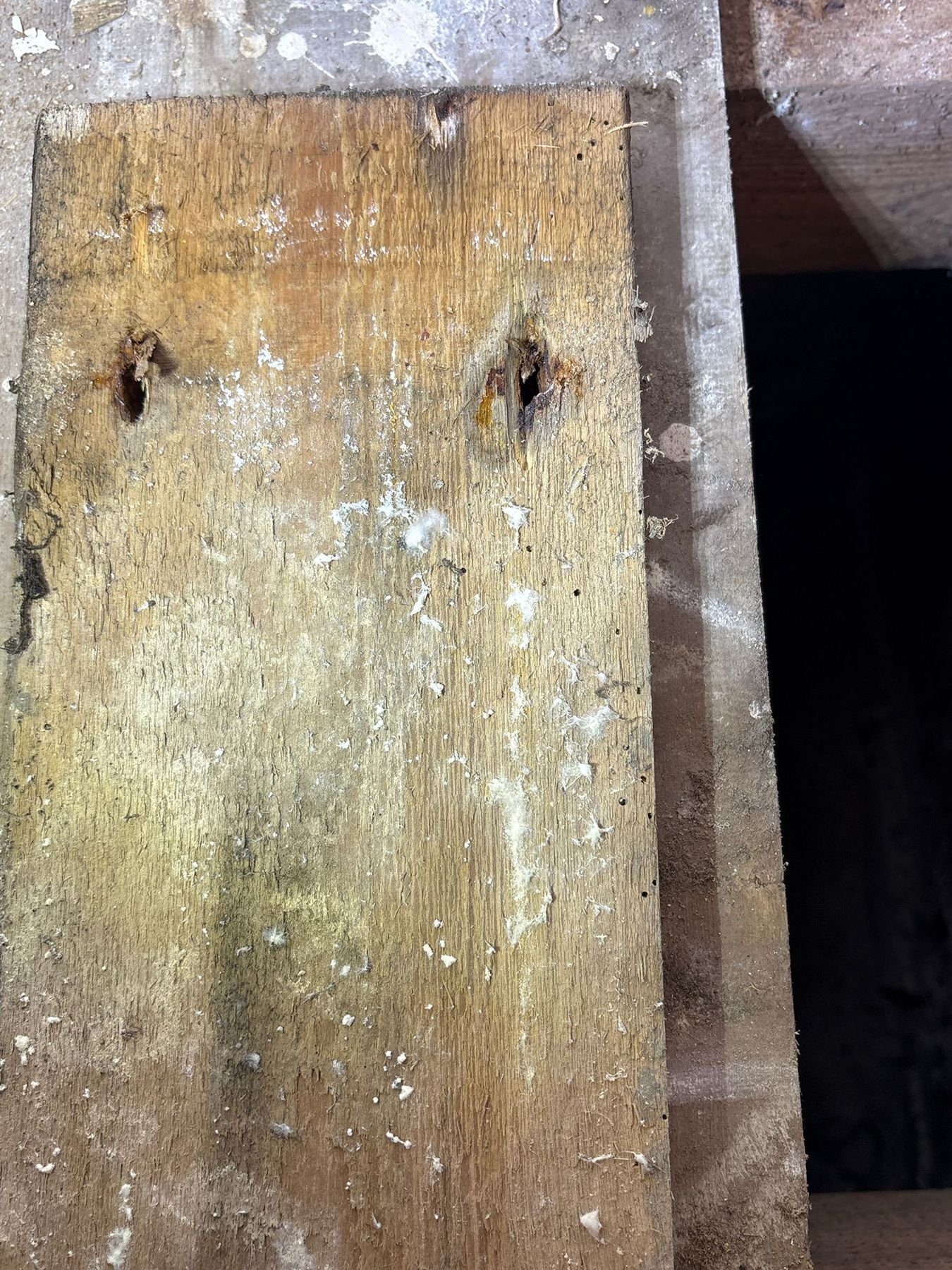
Before: timber decay with fungal growth and woodworm flight holes — Bexhill.
Signs that timber needs investigating
- A springy, uneven, dipping or soft floor
- Skirting boards that crumble or give way when pressed
- Soft, decayed or distorted window frames and sills
- A persistent musty or mushroom-like smell
- Fungal growth, fine strands, or rust-coloured dust
- Doors or windows that have dropped or twisted
These signs can also belong to a leak, rising or penetrating damp, or a ventilation problem. Do not ignore a bouncy floor, and do not start ripping out timber until the cause and the extent are clear. Our guide to a bouncy or soft floor explains when to worry.
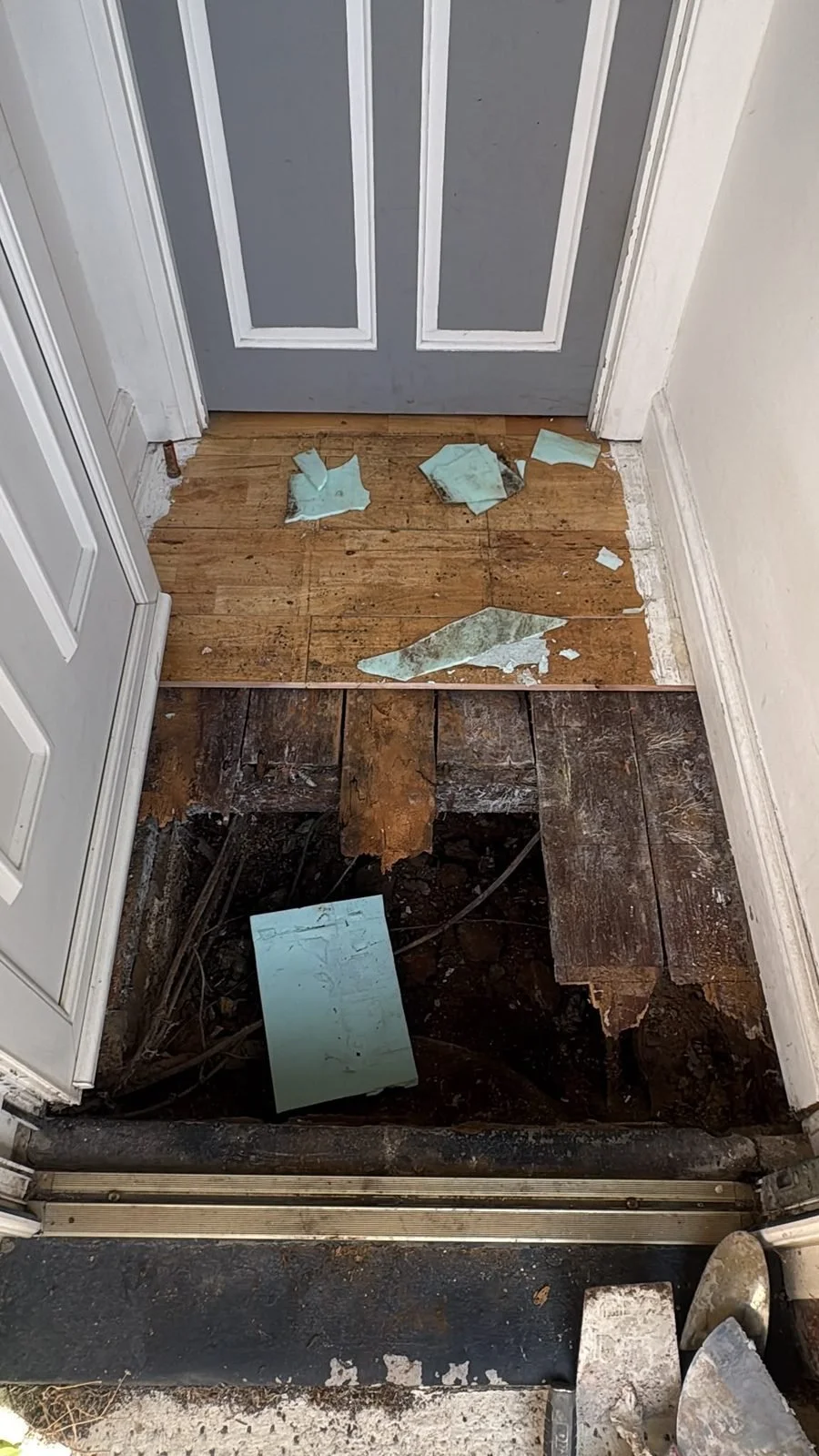
During: floor opened to expose rotted subfloor timbers — Bexhill.
Joists, floors, skirting, windows and sills
The repairs we carry out depend on what the survey finds, and on how much strength the timber has left.
Floor joists and suspended floors. Joist ends built into damp masonry, blocked airbricks and a damp underfloor void are common in older Sussex and Kent houses. Where decay is limited and the remaining timber is sound, a local repair may be enough. Where a joist has lost a significant part of its strength, or several timbers are affected, replacement is the safer option. Our rotten floor joists article explains how we decide.
Floorboards, skirtings, windows and sills. Wet boards, crumbling skirting and rotten sills often sit over a wider moisture problem. We cut out decayed sections, replace them with sound timber, and deal with the moisture path that caused the damage.
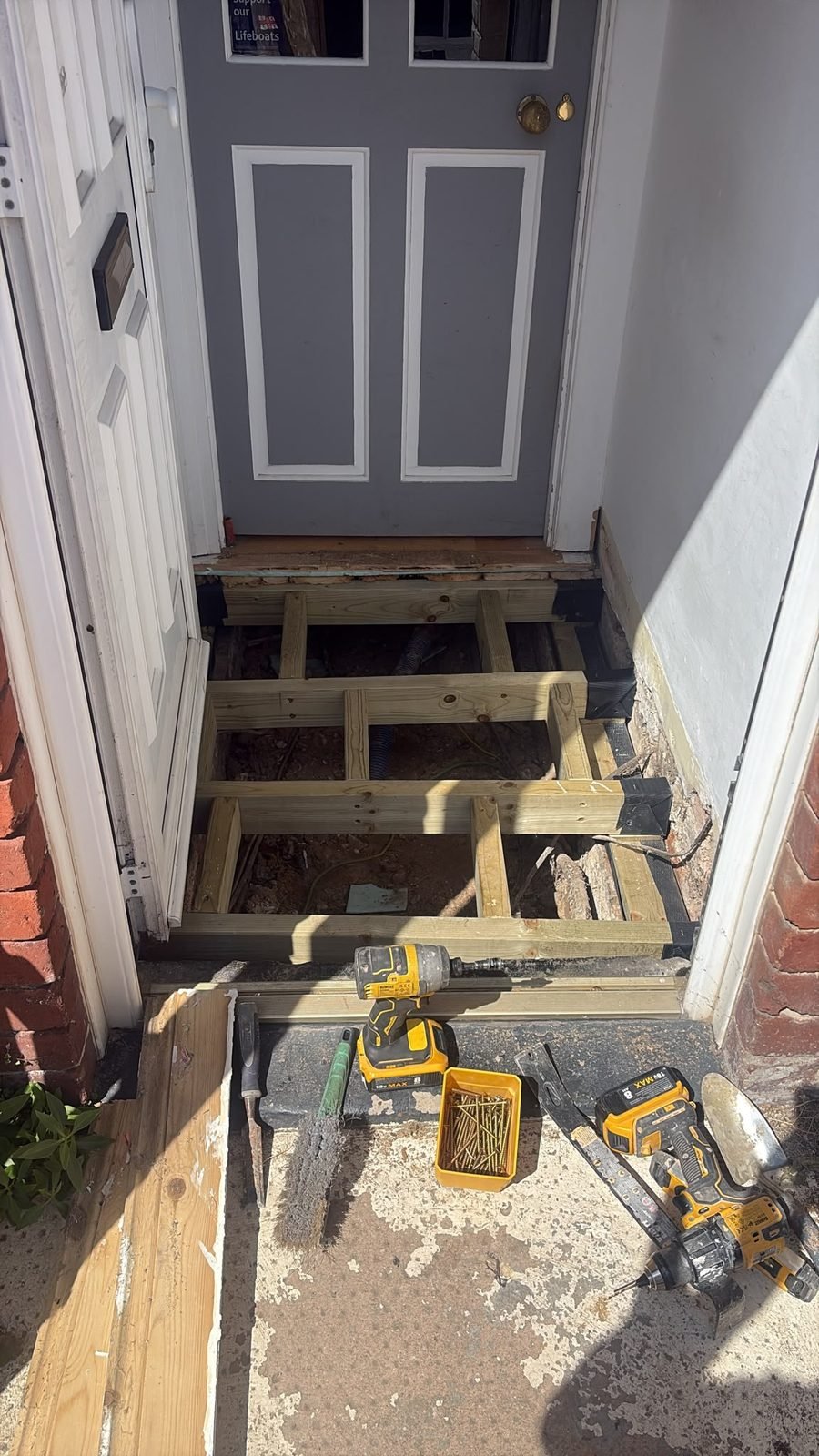
During: new structural floor frame installed after timber replacement — Bexhill.
How the work is done
A proper repair usually follows this order:
- Find and stop the moisture source
- Improve ventilation and drying
- Expose enough of the area to establish the extent
- Cut out and replace, or repair, weakened timber
- Apply an appropriate treatment only where the survey supports it
- Reinstate floors, plaster, skirting or finishes
Treatment products do not compensate for an unresolved leak. We do not quote until we have surveyed the property, and we do not publish a price list.
How the £50 + VAT survey works
Book
Arrange a convenient survey. Call, WhatsApp or use the contact form.
Inspect
We inspect accessible rooms and timber, and take moisture readings and photographs where they help.
Report
Written findings, photographs and a clear recommendation. If access is limited, we will say so.
Quote
A quotation only if work is needed. The £50 + VAT survey fee is taken off your final invoice if you go ahead with our quoted work within 30 days.
Your appointment is a proper inspection, not a sales visit. Where it is safely possible, we look at subfloors, lofts and other concealed areas. Book a survey, read what the £50 + VAT survey includes, or see our Survey Terms.
Areas we cover
Renovani covers homes across East Sussex, West Sussex and Kent, including the towns below, as well as nearby towns such as Polegate.
Frequently asked questions
How can I tell wet rot from dry rot?
Wet rot usually stays close to a clear moisture source and leaves timber soft or spongy. Dry rot can spread further, sometimes through masonry and voids, and may show cuboidal cracking or rust-coloured spore dust. A survey confirms which you have.
Can you just treat the timber and leave it in place?
Only where enough sound timber remains and the structure can be made safe. Severely weakened joists, sills or frames need to be cut out and replaced, and the moisture source has to be fixed.
Do you also treat woodworm?
Yes, where the survey finds active wood-boring insect attack. Flight holes alone do not prove that an infestation is active. See our timber treatment page.
How do I book, and what does the survey cost?
Call or WhatsApp 01424 863146, email admin@renovani.co.uk, or use the contact form. The survey is £50 + VAT. The £50 + VAT survey fee is taken off your final invoice if you go ahead with our quoted work within 30 days. See our Survey Terms.
Are the repairs guaranteed?
Qualifying timber-treatment systems can receive a manufacturer-backed Biokil guarantee of typically 10 years, following successful registration. The 30-year Biokil guarantee applies only when walls are injected with qualifying DPC cream. See our BIOKIL approval page.
BIOKIL Approved Contractor
Renovani is a BIOKIL approved contractor (account 15196). Qualifying timber-treatment systems can receive a manufacturer-backed Biokil guarantee of typically 10 years, following successful registration. A 30-year Biokil guarantee applies only to qualifying damp-proof course (DPC) cream injection, not to timber repairs.
Professional surveys • Written reports • Clear quotations • Approved systems
Approved Contractor
Account 15196. Qualifying timber systems are typically covered for 10 years, following successful registration. The 30-year guarantee applies only to qualifying DPC cream injection.
Need a professional timber survey?
Call or WhatsApp 01424 863146, or book a £50 + VAT survey. The £50 + VAT survey fee is taken off your final invoice if you go ahead with our quoted work within 30 days.
BOOK A SURVEY — £50 + VAT CALL 01424 863146 WHATSAPP