
Dry rot is the timber problem that makes homeowners (and mortgage lenders) nervous — and for good reason. Once the fungus Serpula lacrymans takes hold in damp timber, it can spread through floor voids, joists and even across masonry, weakening structural wood as it goes. The name is misleading, though: dry rot still needs moisture to start. What makes it different from wet rot is how far it can travel once conditions are right.
We've seen plenty of Sussex and Kent homes where a musty smell, a soft skirting board or a springy floor turned out to be something simpler — and a few where dry rot was the real issue. Here's how to tell what you're looking at, and when it's worth getting a proper survey before anyone starts ripping out timber.
What dry rot actually is
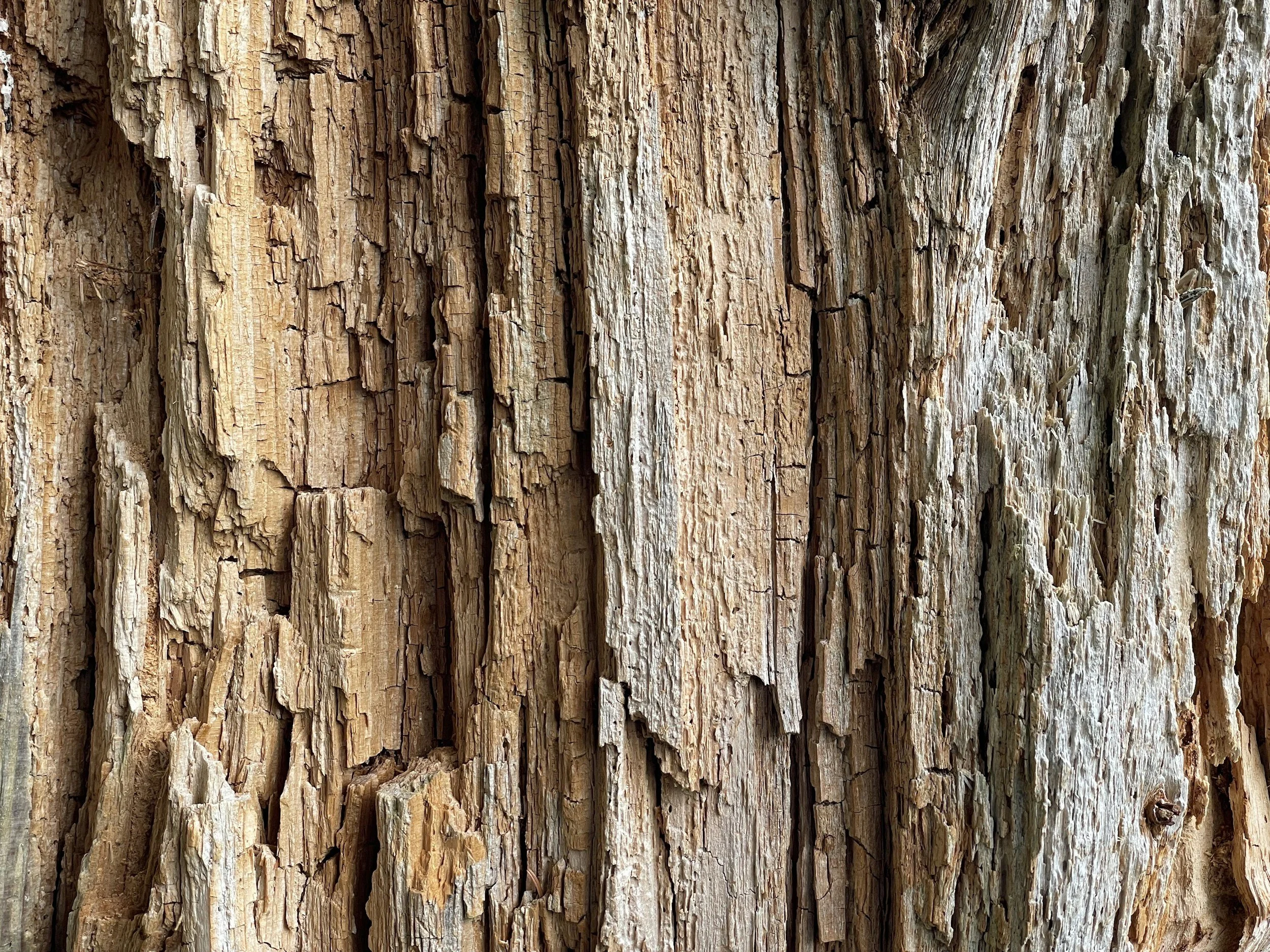
Dry rot is a specific wood-destroying fungus. It feeds on the cellulose in timber, leaving the wood brittle, shrunken and weak. Unlike most wet-rot fungi, which stay close to a clear moisture source, dry rot can send strands through plaster, brickwork and voids in search of more timber. That reach is why an outbreak needs careful mapping, not a quick spray and a coat of paint.
It typically needs timber moisture content around 20% or higher to get going, plus still, poorly ventilated air. Once established, the fungus can keep moving into neighbouring timber if the damp conditions continue. Stop the moisture and improve airflow, and you cut off what it needs to live — but any timber that has already lost strength still has to be assessed and repaired.
The warning signs to look for
One sign alone rarely proves dry rot. It's the combination that matters.
Cuboidal cracking.
Timber that has dried and shrunk into cube-like blocks, cracking across the grain as well as along it. This is one of the classic dry-rot patterns.Soft, crumbly or unusually light wood.
Press gently on skirting, floorboards or joist ends. Timber that gives way or crumbles under light pressure has lost strength.White or grey cotton-wool growth (mycelium).
Silky strands or fluffy patches spreading across timber, and sometimes onto masonry or plaster. In still air it can look like cotton wool; in drier conditions it may form a skin or fine strands.A rust-coloured fruiting body.
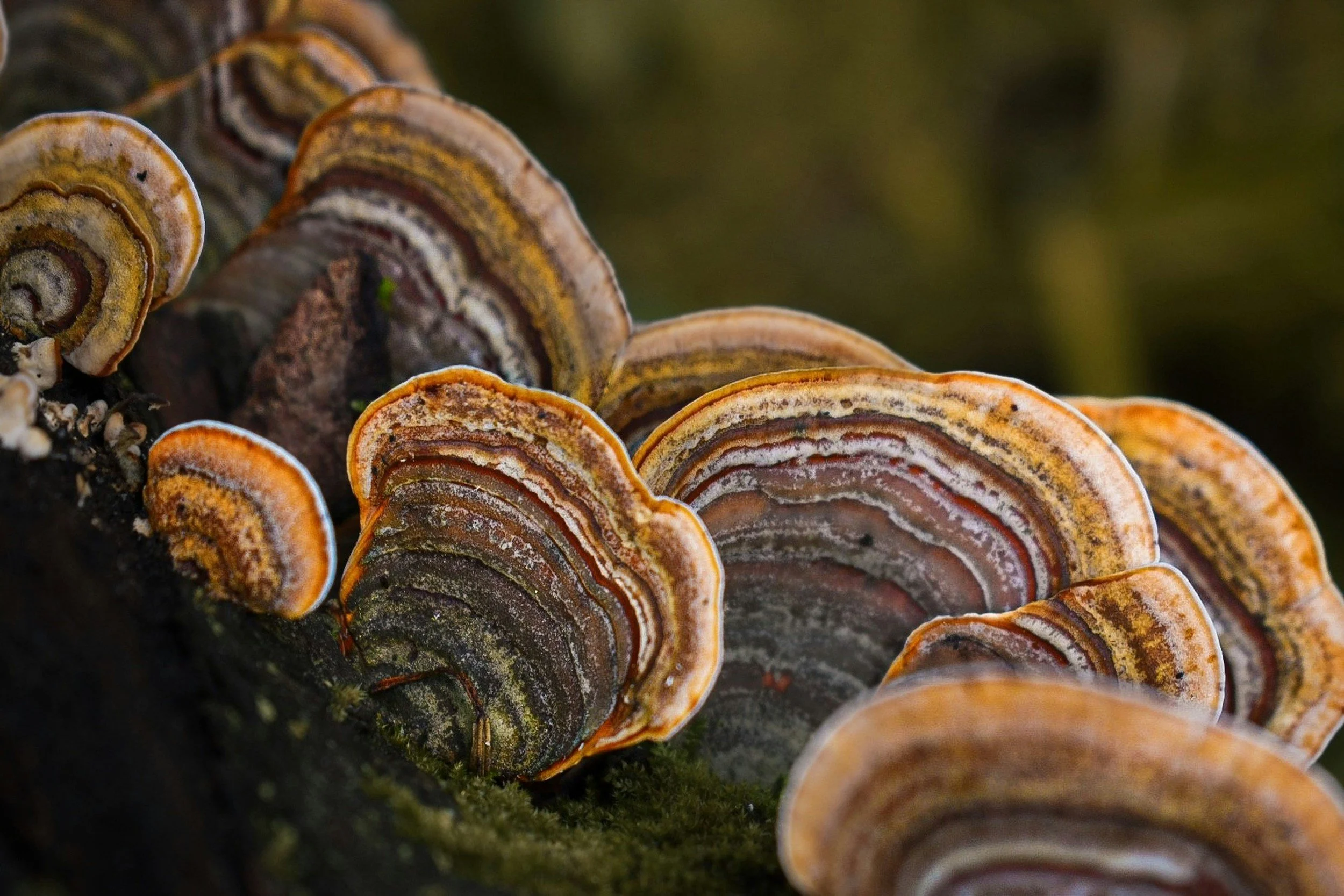
A flat, pancake-like fungus, often with a white edge, that releases orange-brown spore dust. Finding one is a strong clue that dry rot is active somewhere nearby.Rust-coloured dust
on windowsills, skirting or nearby surfaces, without an obvious fruiting body in sight.A mushroom-like or musty smell, especially near floors, under-stairs cupboards or cellars. Our guide to a musty smell with no visible damp covers other causes of that smell too.
Springy, uneven or dipping floors, warped joinery, or plaster that looks blistered or sunken where timber behind it has shrunk.
If you only have soft timber next to an obvious leak and no cuboidal cracking or mycelium, wet rot is often the more likely explanation. We compare the two (and woodworm) in wet rot vs woodworm.
Where dry rot likes to hide

In older homes across East Sussex, West Sussex and Kent — Victorian terraces, inter-war semis, cottages with suspended timber floors — dry rot often starts where moisture and poor airflow meet:
Under suspended ground floors, especially where airbricks are blocked by raised patios, flowerbeds or render
Joist ends built into damp masonry, or wall plates sitting on a bridged damp-proof course
Around bathrooms and kitchens, where a slow leak under a bath, shower or sink soaks nearby timber for months
Cellars, basements and under-stairs voids
Roof spaces with long-term leaks, defective flashings or poor ventilation
Behind skirtings and fitted units on cold or damp external walls
Because so much of this is out of sight, a room can look fine while the floor structure underneath is already weakened. Our guide to hidden timber decay warning signs is a useful checklist if you're not sure what you're seeing.
Dry rot vs wet rot (quick distinction)
Dry rot
Moisture needed: Needs damp timber to start; can then spread further
Timber look: Cuboidal cracking, brittle, shrunken
Growth: Cotton-wool mycelium; rust-coloured fruiting body
Reach: Can travel through masonry and voids
Wet rot
Moisture needed: Stays close to a clear moisture source
Timber look: Soft, spongy, often darker; splits along the grain
Growth: Usually more localised fungal growth
Reach: Generally limited to the wet area
Getting this wrong matters. Treating the wrong fungus, or replacing timber without fixing the moisture source, wastes money and leaves the problem free to return.
What actually stops dry rot
Effective work follows a clear order:
Find and stop the moisture source
— leaks, penetrating damp, bridged DPCs, blocked sub-floor ventilation, defective gutters and so on. Without this, treatment fails.Map the full extent
of affected timber and any strands through adjacent masonry or plaster. Guesswork leads to either under-repair or unnecessary strip-out.Remove or repair weakened timber
to a safe margin beyond the decay, and replace with sound, appropriately treated timber where needed.Improve drying and ventilation
especially under floors, so remaining timber can dry and stay dry.Apply a suitable fungicidal treatment
only where a survey supports it — not as a blanket "just in case" spray across the whole house.
If someone quotes for extensive timber removal or chemical treatment without first explaining the moisture source and the evidence for dry rot, get a second opinion.
When to get a damp and timber survey
Book a survey if you've found cuboidal cracking, mycelium, a fruiting body or rust-coloured spore dust; if floors feel springy and there's a mushroom smell; if a homebuyer's or mortgage valuation has flagged possible dry rot; or if wet rot was diagnosed but the damage seems to be spreading beyond the wet area.
A useful survey should:
Confirm whether dry rot, wet rot, woodworm or something else is present
Identify the moisture source
Assess how far decay has gone into accessible (and reasonably accessible) timber
Give a proportionate repair plan, not a scare quote
If a lender has asked for a report, see our guide to damp and timber reports for mortgage lenders. For typical survey pricing in our area, read how much a damp survey costs in Sussex and Kent.
Think you might have dry rot? Don't ignore it, and don't panic-strip the house either. Renovani carries out independent damp, mould and timber surveys across Sussex and Kent. We'll tell you honestly what we've found, what needs doing, and what doesn't. Call 01424 863146, email admin@renovani.co.uk, or book a survey.
