
A damp concrete floor is usually caused by one of three things: ground moisture coming up through a slab that has no damp proof membrane (DPM) or a failed one, condensation forming on a cold floor surface, or a leak such as a heating pipe buried in the screed. A simple test tells you which one it is. A floor with no membrane or a failed one is usually fixed with a liquid or sheet membrane, not a new floor.
At Renovani we see this every week in older homes across Hastings, St Leonards, Bexhill, Eastbourne, Hailsham, Battle, Rye, Seaford, Lewes, Brighton and Tunbridge Wells.
What are the signs of a damp concrete floor?
Floor tiles lifting, or grout turning dark and powdery
Laminate or wood flooring cupping, swelling or going black underneath
Carpet and underlay that smell musty or feel cold and clammy
White, fluffy salt deposits on the bare slab
Damp tide marks along the bottom of the walls and damp skirting boards (see our guide to damp skirting boards)
Mould on the back of rugs or furniture that sits against the floor
Why is my concrete floor damp?
No membrane, or a failed one. Many solid floors laid before the 1960s have no DPM at all. Later floors can have one that is torn, or one that was never joined to the damp proof course in the walls. Ground moisture then rises through the concrete and gets trapped under modern floor coverings such as vinyl, laminate and rubber-backed carpet. Those coverings stop it from evaporating, which is why many homeowners notice the problem after a new floor goes down.
Condensation. A concrete slab is cold, especially in winter. Warm, moist indoor air hits it and forms water on the surface or under mats. It is common in kitchens, utility rooms, garages turned into rooms, and rooms with poor ventilation.
Leaks. A slow leak from a heating or water pipe in the screed can give a damp patch that keeps spreading, often with a rising water bill or a boiler losing pressure.
High outside ground levels. If the patio or soil outside is higher than the inside floor, water can get in where the floor meets the wall. Our article on bridged damp proof courses explains this in more detail.
How can I tell whether it's rising damp or condensation in the floor?
Tape a square of clear polythene, about 30cm across, tightly to the bare floor on all four sides and leave it for 24–48 hours.
Moisture under the sheet means it is coming up through the slab. That points to a missing or failed membrane.
Moisture on top of the sheet means condensation from the air in the room.
A patch that stays wet, or keeps growing in one area, points to a leak.
It's a good first check, but it doesn't measure how wet the slab is or where the water is getting in. A proper survey uses calibrated meters and looks at the floor, the walls and the outside levels together. See our guide to moisture meter readings.
How do you fix a damp concrete floor?
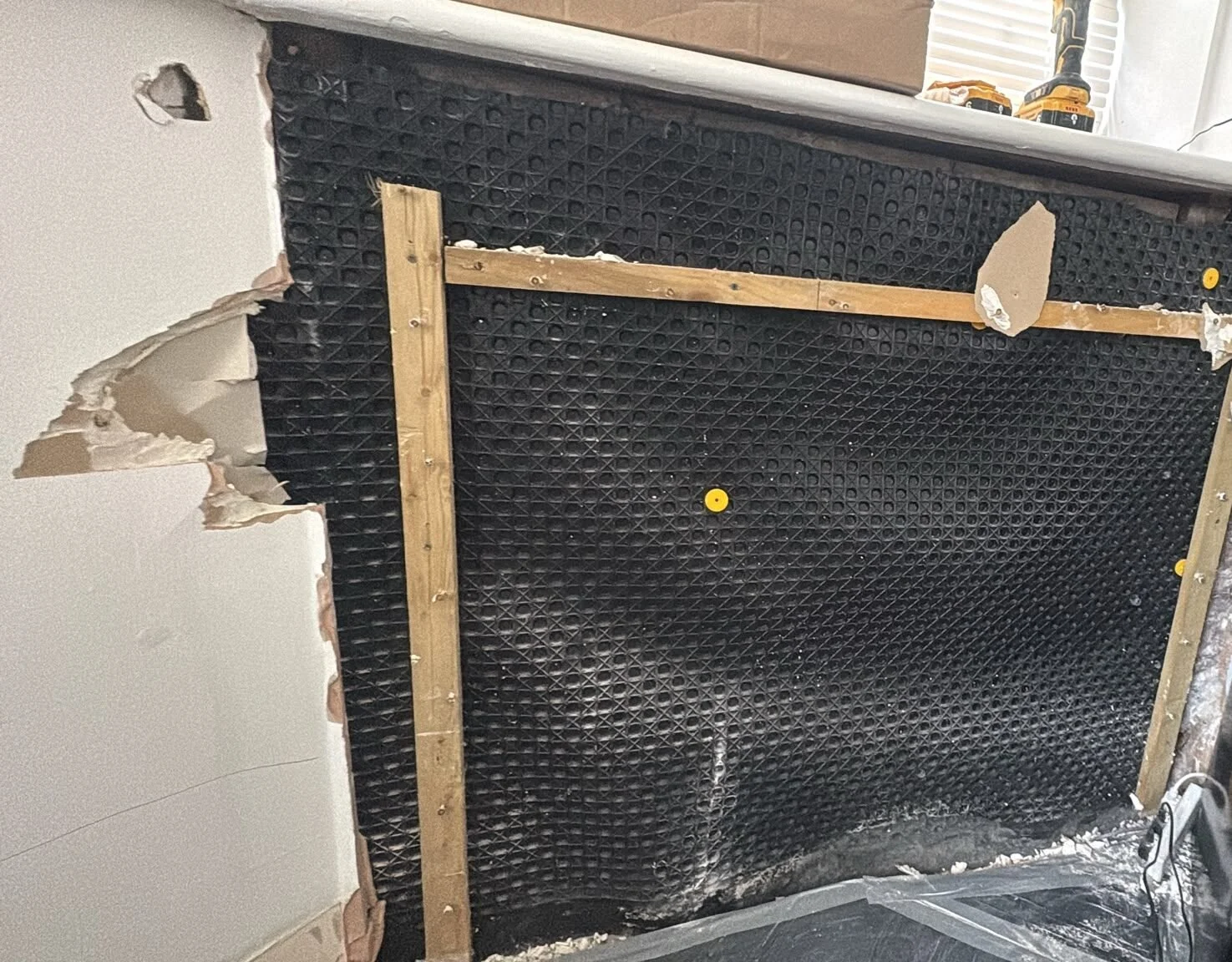
Liquid damp proof membrane: a coating painted or rolled onto the existing slab, then screeded or tiled over. It is the most common fix where floor height can't go up much, and it should be lapped up the walls and linked to the wall damp proof course.
Sheet membrane or cavity drain membrane: best for very wet floors, cellars and floors below ground level. Find out more in damp proofing vs tanking and our review of damp proof membranes.
Breaking out and relaying the floor: only needed when the slab is breaking up, sinking or badly contaminated.
Fixing the cause first: lowering ground levels outside, repairing the leaking pipe or improving ventilation. If the problem is condensation, no membrane will cure it.
Should I just put a new floor covering down?
No. Laying new vinyl, laminate or carpet over a damp slab traps the moisture and usually makes it worse. The new floor can fail within months, and the damp gets pushed into the base of the walls. Find out the cause first.
Can a damp floor cause rising damp in the walls?
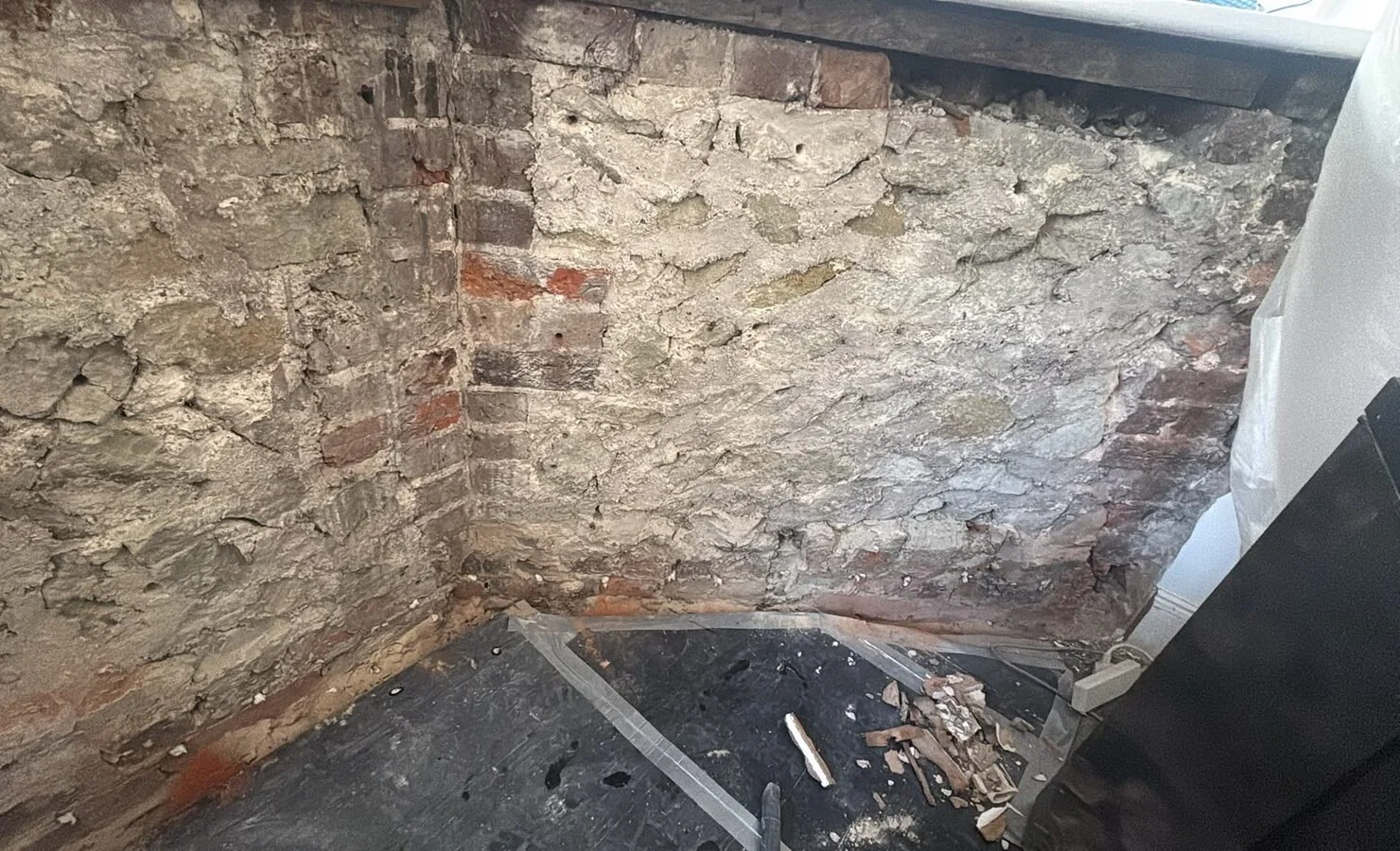
Yes. If the floor membrane and the wall damp proof course aren't joined, moisture can move from the slab into the base of the walls. Signs include damp plaster about a metre up the wall and peeling paint. Read rising damp signs.
Getting it checked in Sussex and Kent
If your floor matches any of the signs above, a survey is the quickest way to find the right fix. Renovani surveys cost £50 + VAT, and you get a written report covering the cause, the readings and the recommended work. We cover Hastings, St Leonards, Bexhill, Eastbourne, Hailsham, Battle, Rye, Seaford, Lewes, Brighton, Tunbridge Wells and the surrounding areas. Call 01424 863146, book a damp survey or see what a damp survey should tell you.
Frequently asked questions
Why is my concrete floor wet underneath the rug?
Usually it's moisture rising through a slab with no damp proof membrane. The rug stops it from evaporating. It can also be condensation on a cold floor. The polythene sheet test tells you which.
Do old houses have a damp proof membrane in the floor?
Many solid floors laid before the 1960s have none. Later floors may have a membrane that is torn, or not joined to the damp proof course in the walls.
Can you damp proof a concrete floor without digging it up?
Usually, yes. A liquid damp proof membrane can be applied over the existing slab and screeded or tiled over. Breaking out the floor is only needed if the slab itself has failed.
Will a dehumidifier fix a damp concrete floor?
It helps with condensation but won't stop ground moisture rising through the slab. That needs a membrane.
How much is a damp survey for a floor?
Renovani surveys are £50 + VAT across Sussex and Kent, and include a written report.
