

Bay windows are one of the best features of a Victorian or Edwardian house, and one of the most common places we find damp. Peeling paint under the sill, black mould in the corners, a brown tidemark on the ceiling of the bay or plaster that's gone soft and salty near the floor: we see all of these regularly in terraces and semis across Sussex and Kent.
The good news is that bay window damp nearly always has a clear cause. The tricky part is that several possible causes sit within a metre of each other, so the fix depends on finding the right one first.
Why bay windows get damp
A bay sticks out from the main wall. That means more exposed surfaces, more joints, its own small roof, and often thinner walls than the rest of the house. Many bays were also built with timber frames or brick piers that have had a hundred-plus years of weather. Put all that together and it's an obvious weak spot.
1. The bay roof
The little roof over the bay (lead, felt, slate or tiles) is the first thing to check if damp shows at the top of the bay, around the ceiling or high on the walls.
Lead that has split, lifted or lost its flashing where it meets the main wall
Felt roofs that have blistered or cracked
Blocked or overflowing gutters dumping water against the bay
Rotten timber fascias letting water into the head of the window
Damp that gets worse after heavy or wind-driven rain is a strong hint. Our guide to penetrating damp after heavy rain goes into more detail.
2. Window sills and frames
Damp under the window, on the sill board or in the wall just below it, often comes from the outside sill:
Cracked stone or concrete sills
Sills with no drip groove, so water runs back under and into the wall
Failed mastic between frame and masonry
Rotten timber sills on original sash windows
These are usually simple repairs, but left alone they can lead to wet rot in the frame and the timber behind the plaster.
3. Cracked render and pointing
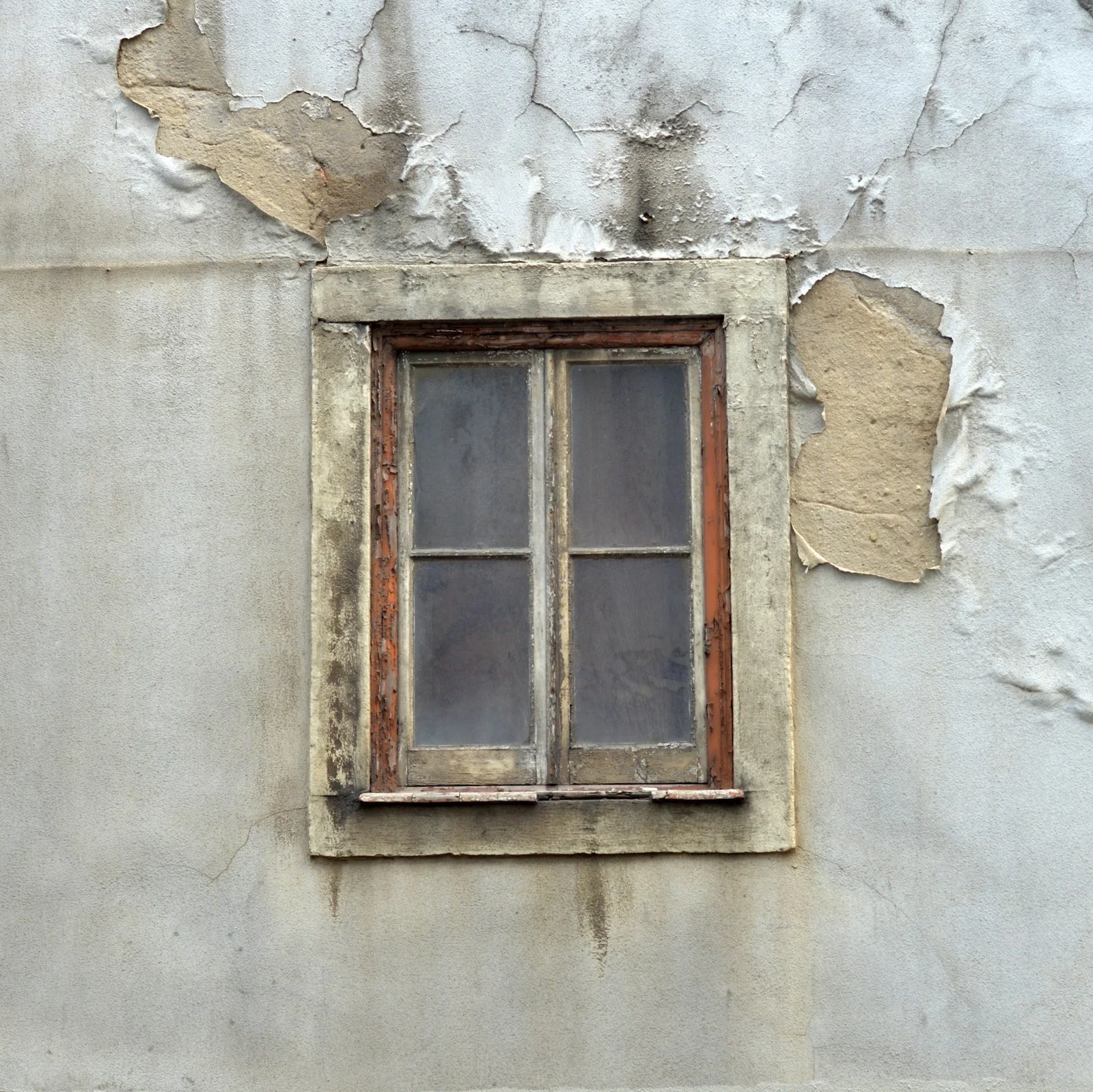
Many bays in coastal towns like Eastbourne, Hastings, Bexhill and Brighton are rendered or painted. Hairline cracks let rain in, and hard cement render then stops it drying back out. Patchy damp at mid-height on the outer walls of the bay, sometimes with bubbling paint, often points this way.
4. Condensation and cold spots
Not every damp bay is a leak. Bays have a lot of glass and a lot of outside wall for the floor area, so they're often the coldest part of the room. Warm, moist air hits the cold surfaces and condenses, especially behind curtains and in the corners.
Signs it's condensation rather than water getting in:
Black mould spots in corners and around the window reveals
Water running down the glass on cold mornings
Worse in winter, when heating is on and windows are shut
Little change after rain
See damp patch: leak, condensation or rising damp? and how to reduce condensation on windows. If the problem started after new double glazing, read condensation after new windows.
5. Low-level damp: bridging and floor timbers
Damp at the bottom of the bay, on skirting boards or the lowest 50 cm of wall, has different causes:
Garden soil, paths or a raised flower bed built up against the bay above the damp-proof course
Render taken down to the ground, bridging the DPC
Blocked air bricks in the bay, leaving the timber floor with no ventilation
In some houses, a missing or failed DPC
Bays are a classic spot for bridged damp-proof courses, and the floor under a bay is a common place to find rotten joist ends. If your skirting is soft or crumbly, see damp or rotten skirting boards.
It's worth saying clearly: low-level damp in a bay is not automatically rising damp, and injecting a new DPC won't help if the real problem is a flower bed, a leaking downpipe or blocked air bricks. More in rising damp signs.
Quick checks you can do yourself
Look at the bay roof from an upstairs window: split lead, moss, sagging felt?
Check gutters and downpipes near the bay during rain
Look at the outside sill for cracks and a drip groove underneath
Check ground level against the bay: is soil or paving above the DPC line (usually 150 mm above ground)?
Make sure any air bricks are clear
Note when the damp is worst: after rain, or on cold mornings?
Repairs: what the fix usually looks like
Depending on the cause, the fix might be:
Re-leading or re-felting the bay roof, and clearing or fixing gutters
Repairing or replacing sills, and re-sealing frames
Repairing render, or replacing it with a breathable finish
Lowering ground levels and clearing air bricks
Improving ventilation and heating, or insulating cold reveals, for condensation
Cutting out and replacing rotten timber, then treating it
Replastering with a suitable salt-resistant system once the wall has dried
The order matters. Replastering before the water source is fixed just means doing it twice.

When to book a survey
A damp survey is worth it if:
You can't tell whether it's a leak, condensation or low-level damp
Plaster is crumbling, salty or keeps blowing after redecorating
The floor near the bay feels soft or springy
You're buying a period house and the bay has been flagged
You've been quoted for damp-proofing and want an independent view first
Renovani's £50 + VAT damp and timber survey includes an on-site inspection, moisture readings, photos, written findings and practical recommendations. The £50 + VAT is deducted from any Renovani work you go ahead with. See what a damp survey should tell you.
Bay window damp in Sussex and Kent
Renovani surveys homes across East Sussex, West Sussex and Kent, including Eastbourne, Hastings, Bexhill, St Leonards, Brighton, Lewes, Hailsham, Seaford, Battle, Rye and Tunbridge Wells. We'll find out where the water is really coming from and tell you what's genuinely worth doing.
