
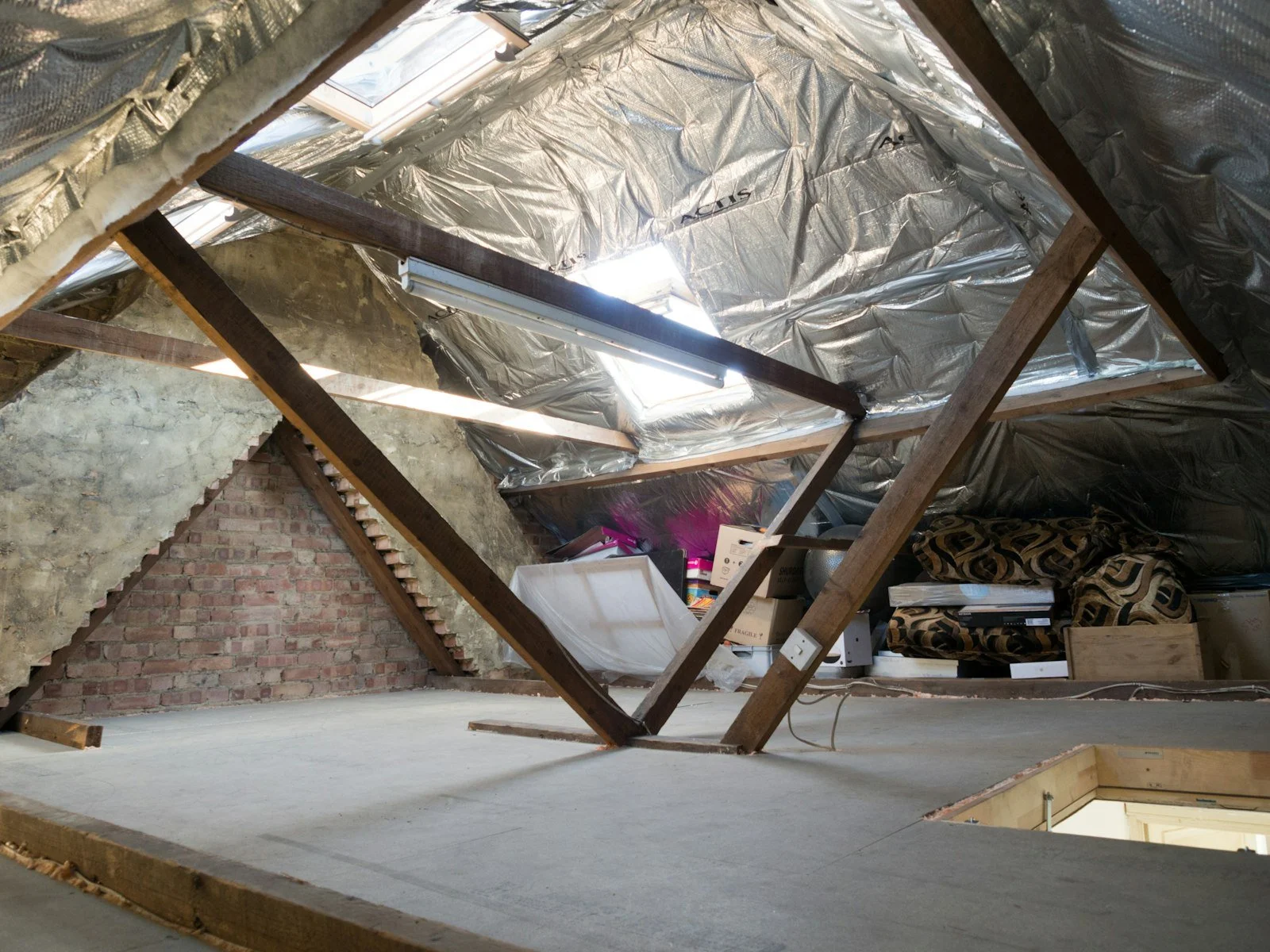
Winter is when most homeowners first notice a problem in the loft. You go up for the Christmas decorations and find the underside of the roof wet, water droplets hanging off nail tips, or black spotting across the timber boards. The first thought is usually “the roof is leaking”. Often it isn’t. Very often it’s condensation.
Here’s how to tell the difference, why it happens, and what to do before it starts to damage your roof timbers.
The signs of condensation in a loft
Droplets on nail tips poking through the roof boards or felt, especially on cold mornings
Wet or “sweating” roofing felt or membrane across a wide area, not just one patch
Black mould spotting on rafters, purlins or the underside of the sarking boards, usually worse on the north-facing slope
Damp, stained or compressed loft insulation, sometimes with drip marks on top
A musty smell when you open the hatch
Rust on nails, tank brackets or metal fixings
Water marks on ceilings below that appear after cold snaps rather than after heavy rain
Condensation or a roof leak?
A rough guide:
Condensation tends to be spread over a large area, worst in cold, still weather, and often appears even when it hasn’t rained. Mould is spread evenly across the timbers.
A leak usually shows up in one place (around a chimney, valley, vent, skylight or a slipped tile), gets worse during or just after rain, and leaves a single run or tide mark.
You can have both, and a small leak adds moisture that makes condensation worse. If you can’t tell, that’s exactly what a survey is for.
Why lofts get condensation
Warm, moist air from the house rises into the loft and hits the cold underside of the roof. When it cools below its dew point, the moisture comes out as water. The usual causes are:
Not enough ventilation. Insulation pushed right into the eaves can block the airflow that is supposed to carry moisture away.
Warm air leaking up from the house. Unsealed loft hatches, downlights, gaps around pipes and cables all let humid air straight in.
Bathroom and kitchen extractor fans venting into the loft instead of to outside. This is very common and puts a lot of moisture where you don’t want it.
Non-breathable roofing felt on older roofs, which traps moisture.
A more airtight house. New windows, extra insulation and blocked-up chimneys all reduce natural ventilation, so moisture that used to escape now builds up.
High moisture levels indoors from drying clothes inside, cooking and showering without good extraction.

Why it matters
A bit of seasonal moisture isn’t a disaster, but if it carries on winter after winter it can lead to:
Mould on timbers and stored belongings
Wet insulation, which stops working properly and costs you heat
Wet rot in rafters, sarking boards and wall plates, particularly at the eaves where moisture collects
Ceiling staining and damage to the rooms below
Roof timbers that stay damp for long periods are at risk of decay. Catching it early is far cheaper than replacing timbers later. See our guide to the signs of hidden timber decay.
What you can check yourself
Make sure extractor fans are ducted to outside, not just into the loft space
Check insulation isn’t blocking the eaves – there should be a clear air path at the edges
Fit a draught seal on the loft hatch
Look for gaps around downlights, pipes and cables and seal them
Cut down moisture downstairs: lids on pans, extractor fans on, and avoid drying washing on radiators where you can. Our article on extractor fans vs dehumidifiers explains what actually helps.
If the condensation is also showing up on your windows and walls, read how to reduce condensation on windows and why mould keeps coming back.
When to get a survey
Book a professional inspection if:
The loft is wet every cold spell, even after you’ve done the basics
You can see mould across the roof timbers
Timber feels soft, crumbly or looks darkened at the eaves or around the chimney
You can’t tell whether it’s a leak or condensation
You’re buying a property and the loft shows signs of moisture
A proper survey checks moisture levels in the timbers, looks at ventilation, extraction and insulation, rules leaks in or out, and checks whether there is any rot or wood-boring insect activity. You get a clear explanation of the cause and a fix to match it, not a blanket treatment. Read what a damp survey should tell you or see what a damp survey costs in Sussex and Kent.
Loft condensation help in Sussex and Kent
Renovani carries out damp, condensation and timber surveys across East Sussex and Kent, including Eastbourne, Hastings, Bexhill, Brighton, Lewes, Hailsham, Seaford and Tunbridge Wells. If you’ve found water or mould in your loft, we can tell you whether it’s condensation, a leak or both, and whether your roof timbers have been affected.
Book a survey or get in touch to arrange a visit. See also our condensation and mould and timber treatment services.
